You boot up your system, select your main Legend, and queue into the Apex Legends competitive mode, hoping for the intense, fast-paced gunfights that originally made this game famous and what got many of us into it. Instead, now the competitive scene is transforming the game from a mechanical skill and aggressive outplays into something completely opposite.
Instead of hearing the continuous echo of gunfire in the distance and seeing aggressive squad rotations, you are met with silence across the map. The competitive environment is shifting rapidly. Traditional playstyles that once rewarded your mechanical skills and sharp aim simply no longer work. You are forced to adapt to a completely new, frustrating way to play the game.
Placement Priorities Ruined Apex Legends’ Ranked Mode
The live scoring system in Apex Legends shows that the ranked mode is all over the place. It feels like a massive camping simulator where you are actively punished for being aggressive or initiating fights.
Everyone in your ranked lobbies is just playing for placements to secure placement points. While picking up kill points is good, it barely gives any points. On the contrary, maximizing your placement multiplier remains the absolute best way to earn a decent number of points and rank up fast.
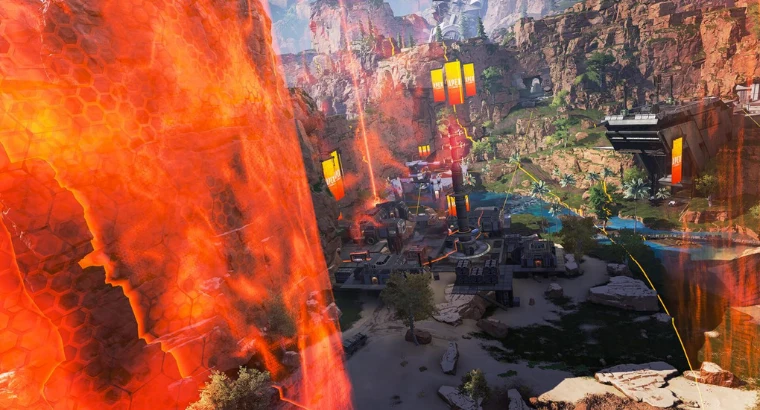
If you try to take an early fight and get eliminated in 15th place, the entry fee points to queue ranked games takes away hours of your grind progress. It feels like the game is punishing you for playing aggressively, something which goes against the very theme of a battle royale. As a result, you and many other players spend fifteen minutes of every match crouched behind a rampart wall or hiding inside a dark building, waiting for the ring to shrink.
This mentality completely pushes the game’s third-party mechanics to another level. Because now you and everyone else are camping the whole game to secure your placement points, and the entire lobby remains alive until the final circles.
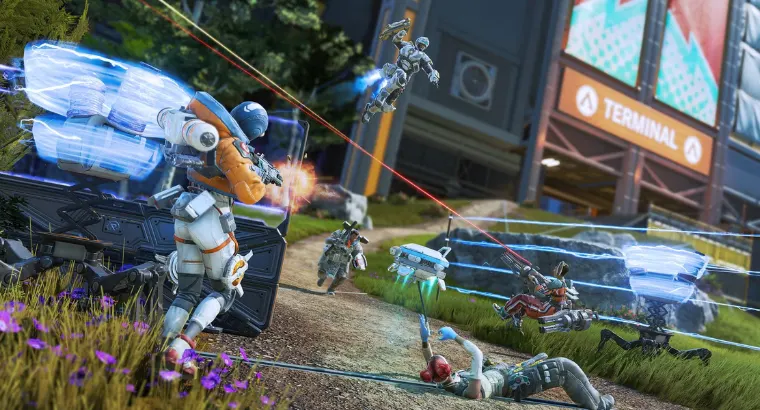
The moment two teams finally start fighting, every single camping squad nearby sees it and jumps in to secure free, effortless low-health picks. You roll up to clean up one squad, only to hear the sound of another team dropping from a balloon right on your head. Then another team snipes you from a rooftop, leading up to chaotic, frustrating fifth, sixth, and even seventh-party fights in a matter of seconds.
The only real difference between ranked and pubs is the map rotation.
by u/TurtleSatan in apexlegends
You are caught in a miserable loop where fighting fairly gets you eliminated by a hidden squad that did absolutely nothing but wait for you to get weak. The tactical element of the game is replaced by which squad hides the longest and wins points, and probably even the whole match.
How Constant Changes and Bad Matchmaking Are Pushing Players Away
Players eventually hit a point where this repetitive gameplay loop becomes too exhausting. These ongoing issues, combined with constant experimental changes introduced to the ranked mode over the seasons, have pushed many players away from competitive play and even from the game altogether.
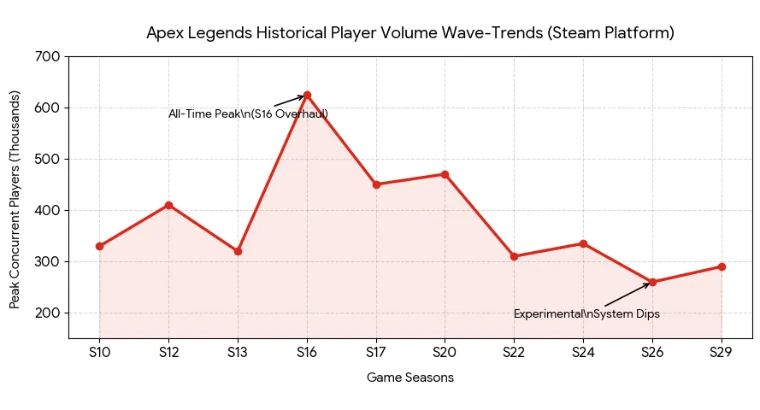
Developers repeatedly alter the competitive mode by changing entry fees, shifting matchmaking rules, hiding your rank behind invisible MMR systems, and constantly shifting the goals. Instead of fixing the core gameplay issues, these experiments only seem to reinforce the camping-simulator meta.
It feels completely disconnected from the original fast-paced hero shooter that everyone originally fell in love with. When you solo queue, you are forced to match against highly coordinated, pre-made three-stack teams while your own teammates refuse to communicate, forcing you to instead run away and hide in a corner just to secure a higher placement.
Overall, there’s a lot of disconnect in what the community wants and what the developers are trying to achieve. However, if Apex Legends needs to survive, at least with respect to the competitive aspect, then it needs to fix the ranked mode and make it more meaningful.
Also read: GTA 6 Will Likely Abandon A Key Feature Associated With Its Predecessors