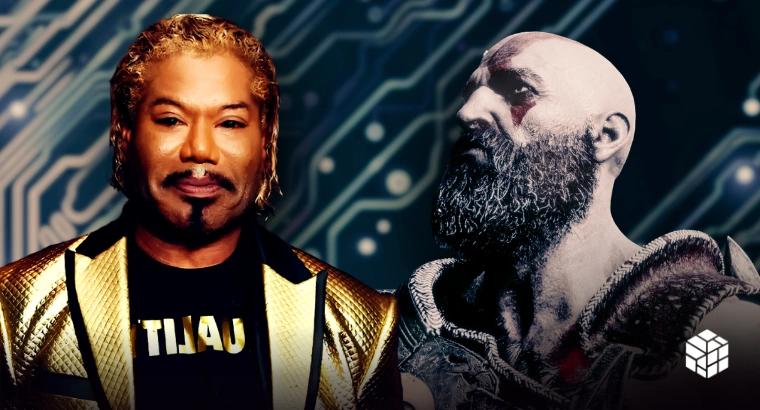
Christopher Judge has questioned how video game adaptations are staffed. Judge, who voices Kratos in the God of War games, criticized adaptations that use hit games as source material but leave out many of the people who created those games in the first place. During a panel at FanExpo, Judge told the audience he doesn’t get why adaptations don’t include original actors and writers, especially when the show sticks closely to the story from the game.
Judge pointed to HBO’s The Last of Us as an example. While he gave Pedro Pascal credit for his performance, he still questioned why the original game’s cast and writers weren’t more involved, especially since the series sticks so closely to the source material at times.
Why Judge Points to The Last of Us
Judge’s concern is that adaptations bypass the people who know the property best. He argued that successful games already have creative teams with years of experience in that universe, and these people shouldn’t be left out when their work is brought to television. Judge said his comments were not a criticism of Pascal, whose work he praised, but questioned whether the television cast was better than the game’s. He recalled a stage reading by the game’s cast, describing it as unreal.
These guys have been immersed in this world for 20 years, but someone’s gonna know better?
Christopher Judge
His main focus was on the writers. Judge asked why the people who wrote the games weren’t simply brought over to write for the adaptations, especially when some episodes follow the same scenes and stories players already know. He argued that those who spent years developing the characters and world have deep knowledge that a new team can’t just pick up overnight.
There are practical differences between the two formats. Writing for games isn’t exactly the same as writing for television. Casting turns on availability, contracts, and the commercial pull of a recognisable name. GameSpot noted that Pedro Pascal is much more of a mainstream name compared to Troy Baker, who played Joel in the games. Baker did appear in the HBO series but as the villain James, not Joel.
Christopher Judge, the voice of Kratos in God of War, has criticized video game adaptations for leaving out the people who actually worked on the original games.
— Pirat_Nation 🔴 (@Pirat_Nation) August 13, 2026
Judge said he doesn't understand why shows based on successful games don't bring back the original actors and… pic.twitter.com/3Ea6i1i0zw
Judge’s Criticism of Amazon’s God of War Series
Judge’s toughest criticism was aimed at Amazon’s God of War series. He questioned why none of the writers from the games were on board, and why writers who had spent two decades in that world were not considered. Cory Barlog, a long-standing God of War creative lead, is credited as an executive producer alongside PlayStation’s Hermen Hulst. Even so, reports say it’s not clear how much Barlog is actually involved in the day-to-day production. That contrasts with The Last of Us, where Neil Druckmann worked as showrunner, writer and director from the start. The show is not entirely without a link to the games. Alastair Duncan, who voices Mimir, is attached. Judge’s objection centres on the writers rather than the cast.
There’s also been a major casting change for God of War. Ryan Hurst was cast as Kratos but suffered a bicep tear during filming, forcing him to vacate the role. The production is recasting and reshooting four full episodes. Now Dave Bautista is reportedly in talks for the lead role, with filming expected to resume this fall. Judge has said publicly that he wanted the role, though he backed Hurst’s casting at the time, calling it a magnificent choice. He has also previously pushed back on fan suggestions of Bautista.
Judge isn’t stepping away from God of War, though. He’s expected to voice Kratos again in God of War Laufey early next year and is set to star in another new God of War game. Sony Santa Monica is also working on remakes of the original trilogy, with TC Carson, the original voice of Kratos, set to return. For Judge, the argument is unchanged. Successful games already have the writers and performers who made them successful. He’s raising the question of whether adaptations should lean more on that existing talent and knowledge.