

Key Points:
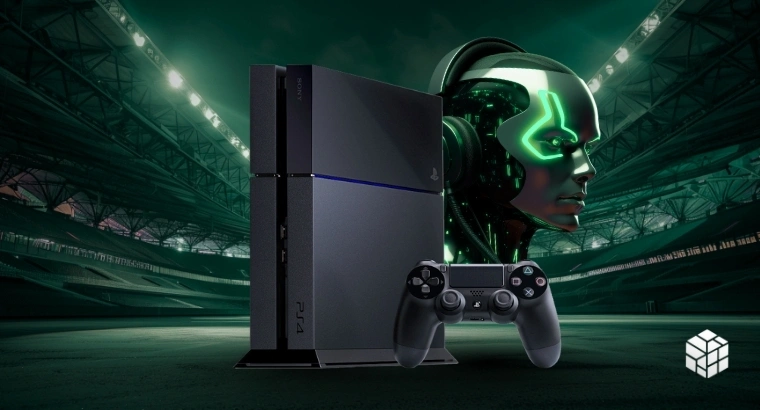
- Sony has filed a patent for an “AI Ghost” system that can autonomously complete difficult game sections or puzzles when a player is stuck.
- The technology uses machine learning trained on massive datasets of user gameplay footage to mimic human strategies and movement.
- This move mirrors a broader industry shift toward high-tech accessibility, competing with Microsoft’s “Gaming Copilot” and existing PlayStation help features.
Sony is reimagining the relationship between the player and the controller with a bold new AI gaming assistant strategy that could eventually make “getting stuck” a thing of the past. Recent patent documents, first filed in September 2024 and gaining international traction this week, describe a sophisticated “ghost assistance” system designed to bridge the gap between struggling players and elusive progression.
The patent outlines an AI agent capable of entering a live game session to act as a digital mentor or a surrogate player. Whether a user is unable to navigate a complex platforming sequence or a grueling boss fight, this AI gaming assistant can be summoned to either demonstrate the solution through a visual “ghost” overlay or assume direct control of the character to finish the task entirely.
From Watching Videos to “Ghost” Surrogates
Historically, when players hit a brick wall, they turned to external resources like YouTube walkthroughs or community forums. Sony’s proposed system aims to keep players within the ecosystem by integrating those solutions directly into the hardware. The patent describes training an AI agent using “footage from many users that have played the game,” alongside diverse online sources.
This data-driven approach allows the AI to understand the specific context of a player’s struggle. Unlike static tutorials, the ghost player would be aware of the player’s current equipment, health, and position.
According to the Patent, the system offers two distinct paths: “Guide Mode,” which provides a real-time visual demonstration for the player to follow, and “Complete Mode,” where the AI simply “takes the wheel” and navigates the hurdle on behalf of the user.
A Competitive Edge in Accessibility
The development of a robust AI gaming assistant is the latest volley in a tech race between Sony and Microsoft to lower the barrier of entry for gaming. Microsoft has been vocal about its own “Gaming Copilot,” a generative AI sidekick integrated into the Xbox ecosystem.
While Microsoft’s tool focuses heavily on conversational tips and achievement tracking via the Xbox Game Bar, Sony’s patent suggests a more aggressive, hands-on level of intervention.
As reported by GameSpot, Sony has been laying the groundwork for this transition for years. The PlayStation 5 launched with the “Game Help” system, which allowed developers to pin hint cards and videos to the console’s UI.
However, adoption of Game Help has been inconsistent among third-party developers. By moving toward a system-level AI that learns from aggregate player data, Sony may be able to provide assistance even in titles where developers haven’t manually created help content.
The “Auto-Play” Controversy and Artistic Intent
While the technology promises to make gaming more approachable for novices and players with disabilities, it has sparked a debate over the “soul” of gaming. Critics argue that “hand-holding” via an AI gaming assistant could dilute the satisfaction of overcoming challenges, a core appeal of genres like “Soulslikes.”
Some first-party Sony titles, such as God of War Ragnarök and Horizon Forbidden West, have already faced backlash for protagonist dialogue that reveals puzzle solutions too quickly.
Furthermore, the “AI Ghost” patent surfaces alongside other Sony filings, including real-time content censorship systems. As noted by DualShockers, there is a growing concern among the enthusiast community that these automated systems could conflict with a developer’s artistic intent.
Sony, however, frames the technology as a way to prevent “churn”, the industry term for when a player quits a game out of frustration and never returns.
Technical Hurdles and Future Implementation
The implementation of such a system requires immense processing power and data management. Sony’s partnership with AMD for the PlayStation 5 Pro has already introduced AI-driven upscaling (PSSR), and analysts speculate that this “ghost” technology could be a flagship feature for future hardware, such as a potential PlayStation 6.
In a gaming environment, Sony would likely need similar safeguards to ensure that AI assistance doesn’t interfere with competitive leaderboards or multiplayer balance. For now, the patent remains a blueprint of Sony’s vision, a future where the console isn’t just a machine you play, but a partner that plays with you.


