Key Takeaways
- Shinji Mikami says he sometimes wishes AI would disappear entirely, including from the gaming industry.
- The Unbound Studio founder is experimenting with AI to improve production quality without increasing budgets.
- Mikami says the studio’s core development work remains largely handled by human developers.
- He believes developers could start losing their jobs to AI within the next five to ten years.
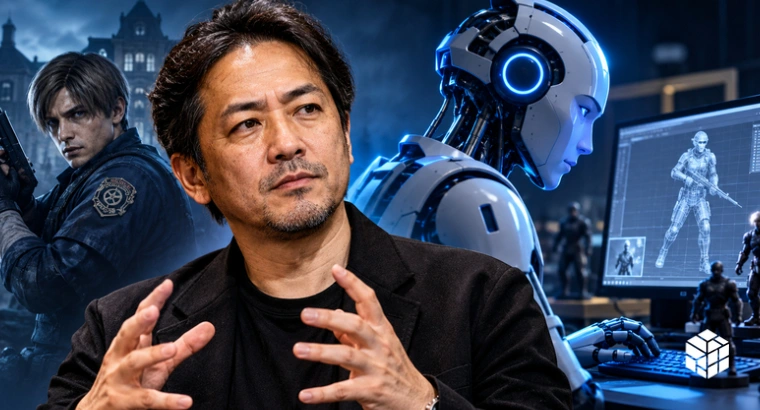
Resident Evil creator Shinji Mikami has raised concerns about artificial intelligence potentially replacing game developers, warning that the industry could face job losses as the technology advances. Speaking alongside Shift Up CEO Kim Hyung-tae at G-CON 2026, Mikami admitted that he sometimes wishes AI would disappear entirely, not just from video games but from the world. However, he is not avoiding the technology altogether.
The founder of Unbound Studio said he is experimenting with AI because using it effectively can help studios achieve better results within the same production budget. For now, he says the studio’s core development work remains largely human-driven, although he is uncertain how much that could change over the next five to ten years.
Shinji Mikami Sees Potential Job Losses as AI Develops
During a discussion with Shift Up CEO Kim Hyung-tae at G-STAR 2026’s G-CON event in Busan, South Korea, Mikami spoke about how artificial intelligence is beginning to influence game development.
The conversation covered creative processes, production costs and the role AI could play in future projects. Mikami acknowledged that he sometimes wishes AI would disappear completely, including from the gaming industry.
Despite those reservations, he is currently testing the technology at Unbound Studio. He explained that effectively using AI can help developers achieve higher-quality results without increasing their existing production budgets.
The concern is not limited to AI’s current applications. Mikami said there could be a real possibility of developers losing their jobs to the technology within the next five or ten years. His comments suggest that he sees the potential employment impact as a longer-term issue, rather than something limited to the tools currently available to studios.
For now, however, he said the main responsibilities at Unbound remain in human hands. The studio is experimenting with AI as a production tool rather than handing over its central creative responsibilities to automated systems. This distinction is important as more developers and publishers explore AI-assisted workflows.
The technology can support certain production tasks, but its growing use has also raised questions about whether studios will eventually reduce their reliance on human artists, designers and programmers.
Kim Hyung-tae Says Human Creativity Still Matters In Game Development
The discussion also included Kim Hyung-tae, CEO of Shift Up, who shared how his company approaches AI-assisted production. Kim explained that the studio has been experimenting with the technology but wants its projects to retain a clear human contribution throughout development. Kim discussed how AI can assist with production tasks without taking over the creative process. He pointed to areas such as lighting adjustments, texture work and retopology, where AI tools can help developers save time.
One example involved early concept development. A team can start with a rough monster sketch, use AI to generate a more developed visual interpretation and then use that result to explore different design directions.
This can reduce the time spent creating complete 3D models for concepts that may eventually be rejected. However, Kim argued that production efficiency should not be the only measure of a game’s quality. Players do not necessarily value a title simply because it was made faster or at a lower cost. Human involvement, he believes, remains important in giving games their own creative identity.
Kim also warned that relying too heavily on similar AI tools could make games look increasingly alike. If different studios use the same systems to generate characters, environments and other assets, their output could begin to lose some of the visual differences that set individual projects apart. For Mikami, the immediate approach at Unbound Studio remains largely human-driven, despite ongoing experiments with AI.
Also Read : Ubisoft Cuts 166 Jobs As It Sets Up New AI Studio