


Key Highlights:
- HyperX and Neurable are working together to make a brain scanning headset.
- The headset looks very similar to an ordinary one, but comes equipped with a plethora of additional sensors.
- These can be used to map brain activity and potentially improve your in-game aiming abilities.
CES 2026 is here, and it brings with it a number of cool tech demos that may or may not see the light of day. One of the more intriguing reveals was from HyperX and Neurable, both of whom have collaborated to create a rather unique gadget that could potentially help you get better at games.
But how exactly does this piece of tech work, and what are its potential implications, consequence and shortcomings? Join in for a deeper dive.
HyperX and Neurable Have Designed a Headset That Could Make You Help You Be Better at Games
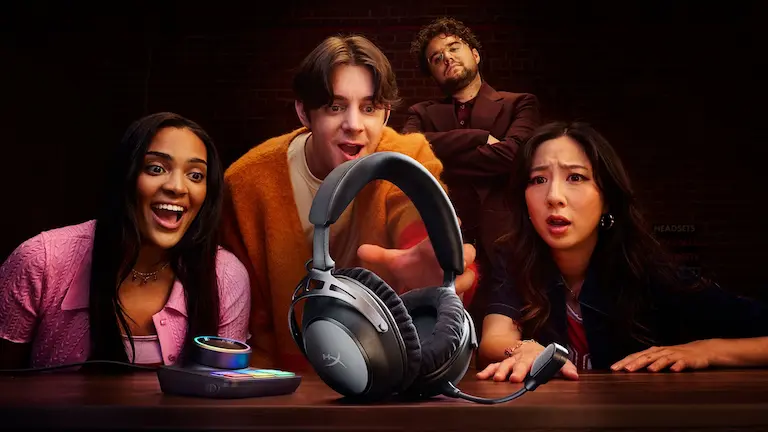
As mentioned in multiple CES 2026 reveals, HyperX and Neurable are working together to create a custom headset that can monitor and track your brain activity, providing you a more ‘personalized’ input on managing your gaming sessions.
It sounds a bit like something out of a movie, but the tech is very real. HyperX has also designed (a rather bulky) looking headset that’s built with all sorts of sensors to track your neural responses.
Admittedly, this design is nowhere near being final, and HyperX quite possibly has more than a few revisions up its sleeve. That being said, the appeal of this particular class of product is something that remains to be seen.
So How Does This Work, Exactly?
Through a clever use of algorithms and visual feedback, HyperX can map your brain’s output and proceed accordingly. There is a fair bit of training involved in the entire process though, and much of the know how involves learning to train the algorithm itself.
The details appear to be admittedly fuzzy (and quite beyond our area of expertise) but the tech is legitimate.
Also Read: The Best Mobile Games to Look Forward to in January 2026
The general idea is to help players focus better when under pressure, by simulating points of relaxation in regular intervals. This has been proven to mildly impactful, with both teams noting a 1.5% improvement in accuracy amongst players, in average.
However, the decrease in reaction time by around 40 milliseconds is way more impactful here, which often can translate to a few frames of advantage.
Potential Uses and Some Criticism
The most obvious use of this kind of tech would be in the professional Esports scene, where landing accurate hits is paramount to success in the big leagues. In these scenarios, even a 2% increase in accuracy could be more impactful than you think; proving to be the difference between defeat and victory.
However, while the tech is undoubtedly impressive, it is still in a very early state of its development. A 2% to 4% boost in accuracy may not appeal to everyone, and you’d ideally want something a lot more transformative in order to make a sizable impact to your gameplay.
Furthermore, the tech is not expected to be accessible or be something that one could buy off the shelves and take for a spin anytime soon. This will take a bit of time to develop, and until then this will remain a (very) niche product with very limited use cases.
It’s also not expected to be inexpensive, as jamming in all those sensors into such a small case is not an easy feat of engineering.
Expect to wait until 2027 before you get any additional news on these products, and even longer if you wish to have them go mainstream.


