Key Takeaways
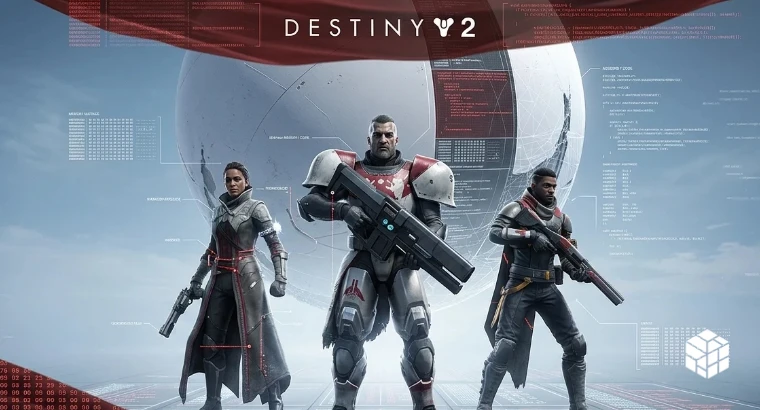
- A fan project has demonstrated the first encounter of Wrath of the Machine running inside Destiny 2.
- Decompilation helps developers study compiled software when the original source code is unavailable.
- Reverse engineering could support game preservation, modding, and projects that adapt older titles to newer platforms.
- Copyright, technical accuracy, and compatibility remain important limitations for unofficial projects.
A fan project involving Destiny 1 content has drawn attention to how decompilation and reverse engineering could affect how older titles are preserved and modified. Footage shared online shows the first encounter of Wrath of the Machine, a raid originally released in Destiny 1, implemented natively inside Destiny 2.
The project has sparked discussion about what community developers can achieve when working with existing game systems, though the available material doesn’t show that the entire raid is complete. The work also raises questions about the difference between restoring older content and creating an officially supported release. Beyond Destiny, similar techniques could affect game preservation, modding, and ports, while also creating technical and legal challenges for developers working with copyrighted software.
Destiny 2 Fan Project Shows How Reverse Engineering Can Recreate Older Content
The distinction between recreating something and building it from scratch matters because recreating an encounter inside another game differs from simply loading the original content.
A project like this can require developers to understand how the original encounter behaves and reproduce its mechanics using the newer game’s available systems. However, the available discussion does not establish that every encounter, asset or remaining feature from Wrath of the Machine has been recreated.
Decompilation is one technique that can support this work. It involves translating compiled software into a more readable representation of its code, while reverse engineering more broadly includes examining how a program operates. Neither process automatically recovers the original source code, design documents, or development tools.
A separate experiment documented by developer Maurice Heumann provides another example of AI-assisted reverse engineering. In an October 2026 technical account, Heumann described using AI coding agents to reconstruct a commercial first-person shooter in C++. The reconstruction included 99% of the game’s functions, with 83% matching the original byte for byte.
That project also exposed a limitation: readable code is not necessarily correct code. The reconstruction required automated comparisons to verify its results. The work illustrates both AI-assisted reverse engineering’s potential and the need for testing.
What Decompilation Could Mean for Older Games
For players, one of decompilation’s clearest uses is bringing older games and their content back into circulation. Some titles become difficult to access as hardware ages, online services shut down or developers stop supporting them. Studying how these games work can help preservation efforts, particularly when the original source code is no longer available.
The Video Game History Foundation has documented the challenges involved in preserving games and making them accessible to future audiences. This work could also give modders more ways to experiment with existing games. By examining how a game’s systems operate, developers may be able to recreate encounters, change mechanics, or adapt content for a different version. The Wrath of the Machine project is one example of a community effort to bring older content into a newer release, though it remains important to distinguish a working demonstration from a finished, fully supported feature.
Game studios can also use reverse engineering, especially when dealing with older code or compatibility problems. However, decompilation does not automatically produce a ready-to-use version of a game. Reconstructed code still needs testing, and developers may have to rebuild assets, fix errors, and account for differences between the original and newer game engines.
Online features can add further complications. For now, the Destiny 2 project shows what a community team is attempting with older game content. Whether similar projects become easier to carry out will depend on the tools available, the amount of manual work involved, and the limits developers face when working with software they do not own.